


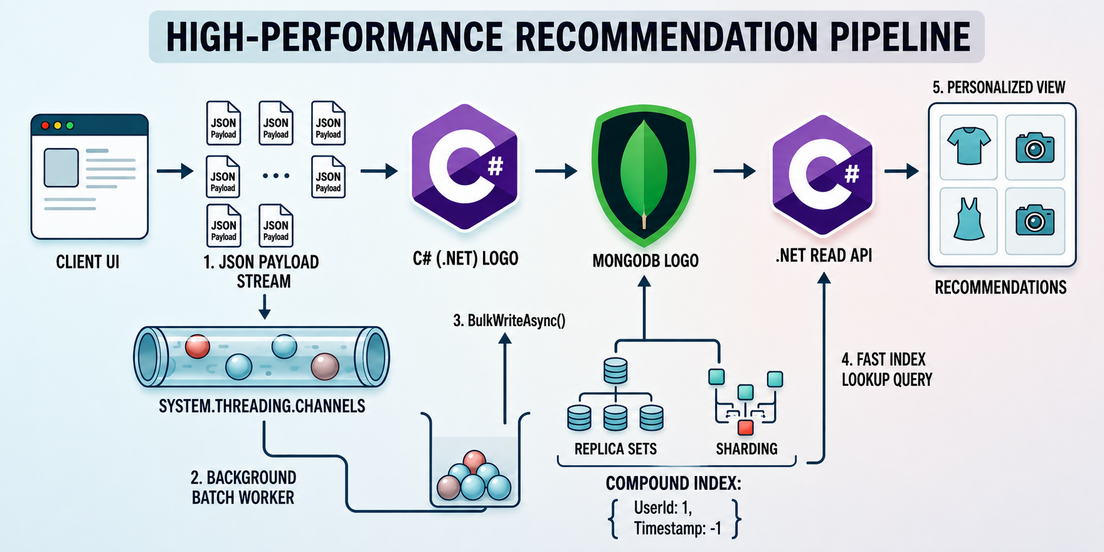
In modern digital platforms, personalized suggestions are no longer just a nice-to-have feature—they are a primary engine for user engagement and sales. Whether you operate an e-commerce marketplace, a streaming service, or a enterprise B2B portal, users expect tailored recommendations that react instantly to what they are browsing right now.
Delivering these suggestions in real time requires an underlying system that can handle thousands of rapid interactions every second without slowing down the site. At PIT Solutions, our engineering teams routinely design event-driven systems that pair the asynchronous processing power of ASP.NET Core with MongoDB’s flexible, high-throughput document model to keep response times under 50 milliseconds.
Why Modern Recommendation Engines Need Scalable Architecture
When an application grows from a few thousand users to hundreds of thousands, user activity logs multiply fast. Every click, scroll, hover, and add-to-cart action creates a data event. If your application tries to recalculate recommendation algorithms directly inside the main web server processes, system memory quickly runs out.
Without a dedicated, horizontally scalable setup, major promotional events or traffic surges can overload your database. This leads to slow page loads, failing API calls, and abandoned shopping carts. Designing a resilient architecture ensures that heavy background data processing never compromises the user experience.
Challenges of Traditional Recommendation System Development
Many legacy platforms attempt to run recommendation features directly inside standard relational database schemas like PostgreSQL or SQL Server. While traditional SQL databases excel at transactional consistency, they struggle with live recommendation workloads for three main reasons:
- Expensive Multi-Table Joins: Querying relationships across Users, Products, Orders, and Clickstream tables requires deep SQL joins that slow down drastically under high traffic.
- High CPU Utilization: Calculating user affinity metrics on the fly in standard transactional databases locks up server resources, impacting primary app functions like checkout or login.
- Rigid Data Schemas: Customer tracking requirements change constantly. Adding new interaction types (such as video watch duration or hover time) into rigid SQL tables often requires complex schema migrations that carry operational risk.
Why .NET and MongoDB Work Well for Recommendation Engines
To bypass these operational bottlenecks, combining modern .NET with MongoDB creates a balanced, highly efficient tech stack.
The ASP.NET Core Runtime
The modern .NET runtime provides non-blocking asynchronous features designed for high-concurrency workloads. Tools like System.Threading.Channels allow applications to accept incoming telemetry events instantly and queue them in memory without tying up active web threads.
MongoDB's Aggregation Engine
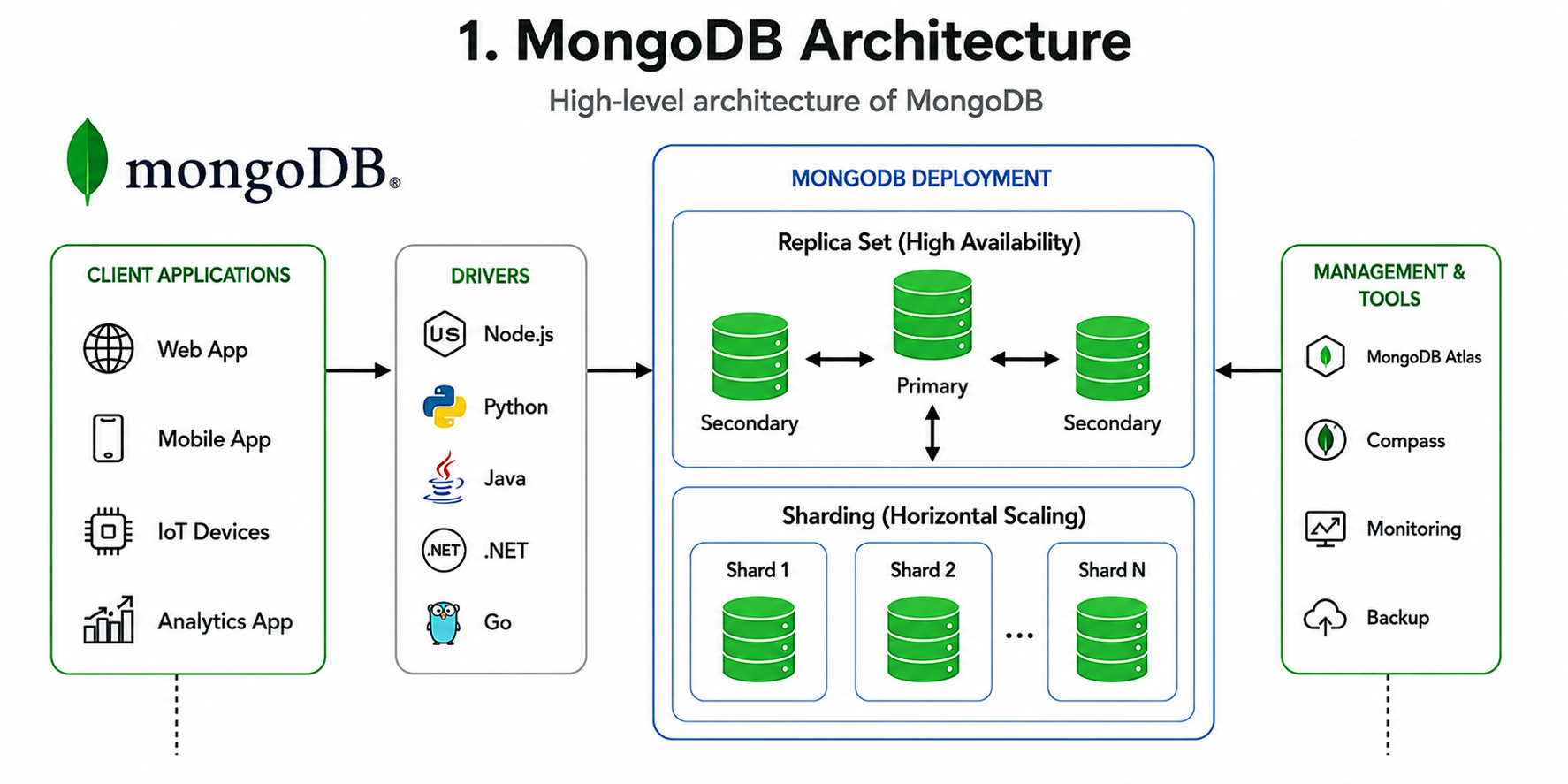
MongoDB complements this by storing unstructured event streams as flexible BSON documents. Its native aggregation pipeline enables multi-stage analytical processing directly on the database cluster, moving heavy math off application servers.
When engineered together by an experienced .NET Development Services team, this combination delivers low latency, flexible data tracking, and smooth horizontal scaling.
Building High-Performance Recommendation Systems with ASP.NET Core
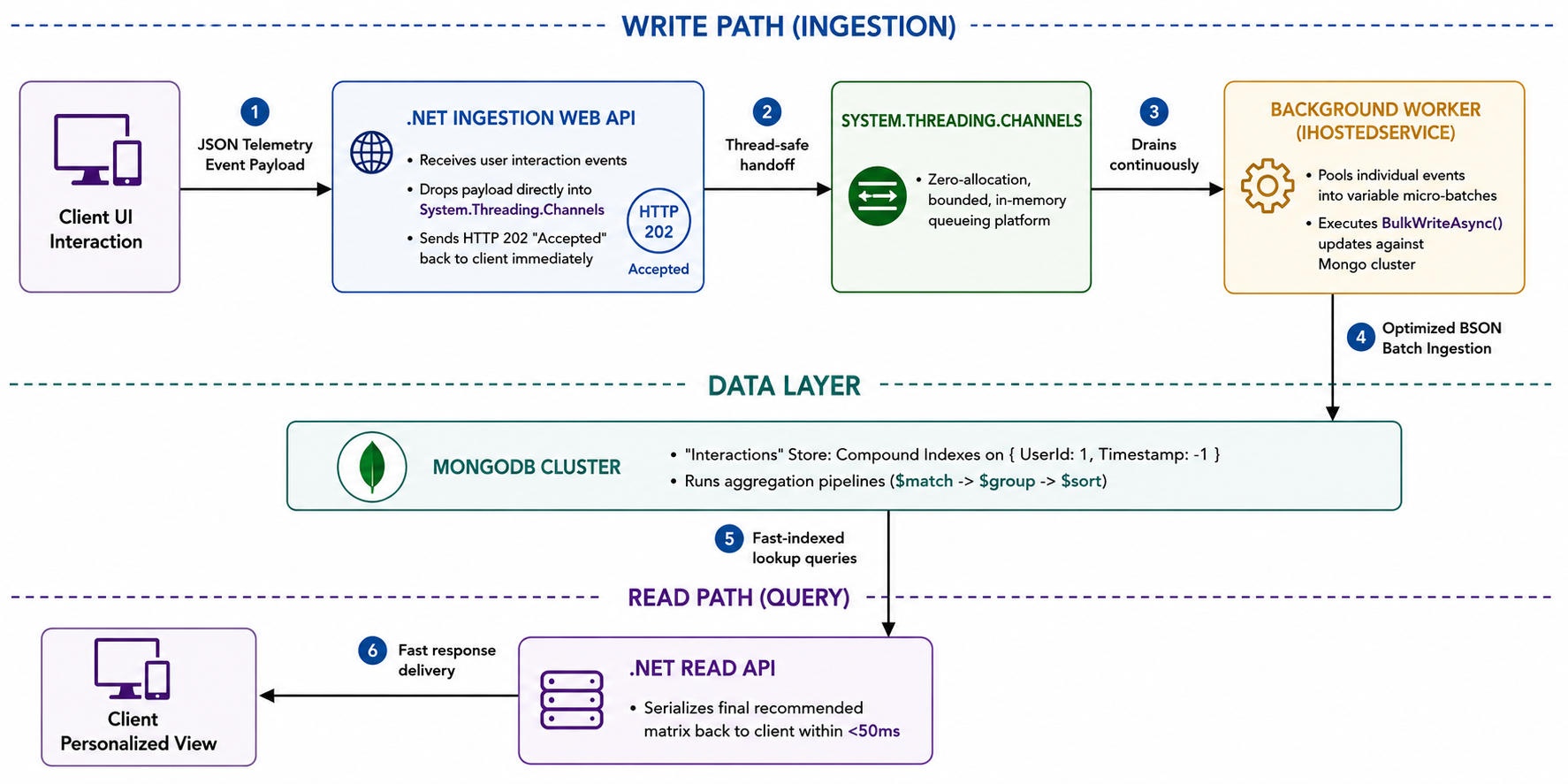
The system flow below illustrates how incoming telemetry travels through an asynchronous buffer in ASP.NET Core before saving into MongoDB, keeping read queries fast and responsive.
Key Architecture Strategies for Scalable Recommendation Systems
When our engineers at PIT Solutions design recommendation engines, we focus on three technical strategies to maximize performance:
1. In-Memory Buffering with Channels
Rather than writing each click directly to the database—which creates massive IOPS overhead—the Web API receives incoming payloads and pushes them into an in-memory queue using System.Threading.Channels. The API returns an immediate 202 Accepted status to the client, keeping HTTP connection pools open and free.
2. Micro-Batching via Background Workers
A dedicated background service (IHostedService) continuously drains the in-memory queue. It bundles events into micro-batches (e.g., 500 events at a time) and writes them to MongoDB using BulkWriteAsync(). This reduces network calls to the database cluster by orders of magnitude.
3. Database Pushdown Aggregations
To generate recommendation lists, complex grouping and sorting calculations are pushed directly to MongoDB using its multi-stage aggregation pipeline ($match -> $group -> $sort). Paired with a compound index like { UserId: 1, Timestamp: -1 }, the database returns calculated recommendation lists without bringing raw interaction logs into application memory.
Real-World Implementation: Handling Flash Sale Load
During a major retail flash sale, an e-commerce platform experienced a 10x spike in traffic, generating over 15,000 click events per second.
Under the old relational architecture, synchronous SQL inserts caused database lockups, ballooning response times to over 4 seconds.
By transitioning to an asynchronous ASP.NET Core channel architecture backed by MongoDB, the platform absorbed traffic spikes effortlessly. Click telemetry was accepted in under 5 milliseconds, while background batch writes kept database operations smooth. Recommendation blocks continued loading for shoppers in less than 35 milliseconds, preserving conversion rates throughout the event.
Business Benefits of .NET Development Services for Recommendation Engines
Modernizing your data infrastructure delivers clear operational and financial advantages:
- Sub-50ms Response Times: Pre-calculated recommendations load almost instantly, keeping users engaged and improving conversion metrics.
- Reduced Infrastructure Spending: Utilizing native database aggregations eliminates the need to maintain expensive separate graph databases or complex caching layers.
- Higher Platform Resilience: Bounded queue buffers absorb sudden traffic surges safely, protecting your web servers from thread pool exhaustion.
For teams managing complex platform migrations, partnering with experts in custom software development ensures your systems are architected for long-term scalability and easy maintenance.
Why Choose PIT Solutions for Custom .NET Development
Building a high-throughput recommendation system requires a clear understanding of modern runtime behaviors, async patterns, and database optimization.
At PIT Solutions, our engineers bring extensive experience designing and modernizing cloud-ready platforms for enterprises worldwide.
- End-to-End System Design: From API architecture and async runtime tuning to MongoDB cluster setup, index optimization, and cloud services integration.
- Performance-First Mindset: We focus on clean code, non-blocking asynchronous patterns, and efficient resource utilization to keep infrastructure costs lean.
- Tailored Solutions: Whether modernizing a legacy system or building a new product from scratch, we collaborate closely with your team to deliver architectures aligned with your technical goals.
Ready to Scale Your Application Infrastructure?
Talk to Our .NET Experts today to explore how our custom .NET and database solutions can upgrade your platform's performance.