


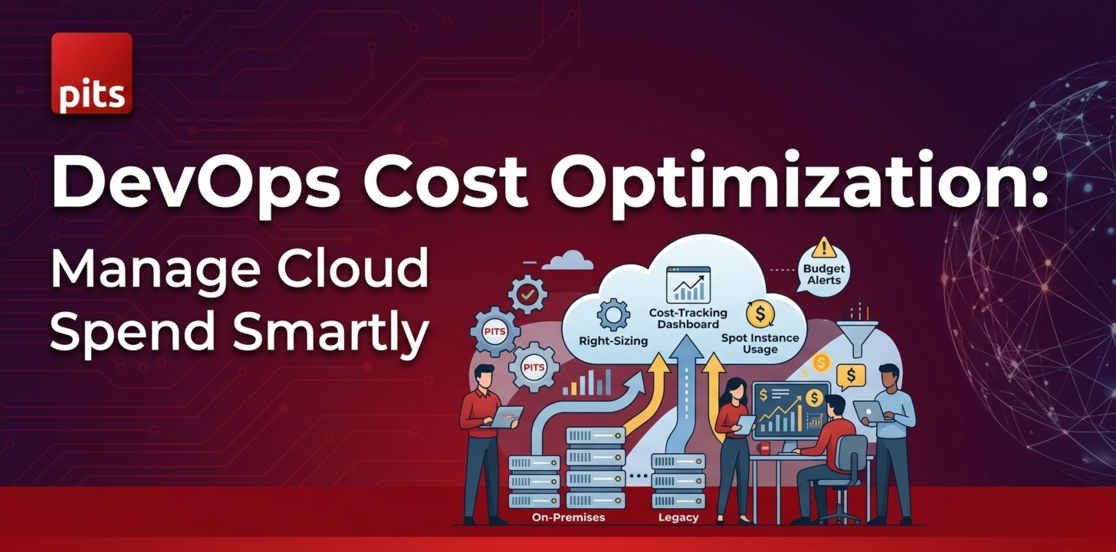
Increasing use of cloud platforms across enterprises and the rapid growth of DevOps-driven deployments have significantly raised infrastructure usage. Without proper governance, costs increase due to poor visibility, unused resources, and uncontrolled scaling. DevOps cost optimization connects workflows with financial discipline, while managing cloud spend ensures balanced usage. Achieving cloud cost efficiency requires structured cost management practices supported by cloud budget control, DevOps financial governance, and cloud spending visibility. Organizations adopting DevOps Services in UAE often face billing challenges, where Pit Solutions, a Devops Consulting Company in UAE, helps build cost-aware DevOps pipelines.
Understanding DevOps Cost Optimization
Managing cloud infrastructure efficiently requires a clear approach to cost control without affecting performance or delivery speed. A structured framework helps organizations maintain a balance between usage and expenses while ensuring scalability. Clear visibility into spending and resource consumption supports better decision-making and strengthens financial discipline across cloud environments.
- DevOps cost optimization helps control infrastructure expenses while maintaining speed and reliability in deployments.
- Cloud cost management focuses on reducing unnecessary spending and improving overall resource usage.
- Cloud expense tracking enables accurate monitoring of costs and supports better financial planning.
- Reducing waste and improving usage ensures performance stability and scalable growth without overspending.
- DevOps pipelines and continuous deployment directly influence resource allocation and billing cycles.
- Strong governance and monitoring ensure accountability, visibility, and controlled spending across cloud systems.
Why Cloud Costs Increase in DevOps Environments
Cloud expenses rise rapidly when infrastructure usage grows without proper monitoring systems. Common cloud cost increase causes include overprovisioned resources, such as large virtual machines and excessive storage allocations. Many organizations also face DevOps cloud spending issues due to idle resources, including unused instances and inactive containers. In our experience, continuous deployment cycles increase compute and network consumption significantly. Multi-cloud environments further complicate billing by creating fragmented systems. Without centralized tracking, teams struggle to maintain visibility, making cost control difficult and leading to higher operational expenses.
Core Principles of DevOps Cost Optimization
Effective cost control depends on adopting structured practices that align operations with financial goals. DevOps cost control principles emphasize visibility, efficiency, and accountability across infrastructure usage. Implementing cloud resource optimization ensures resources match actual demand without overuse. In our findings, real-time dashboards and tagging systems improve tracking accuracy. Automated scaling adjusts resources dynamically, preventing unnecessary costs. Budget governance introduces alerts and thresholds to avoid overspending. These principles, when integrated into DevOps pipelines, support consistent performance while maintaining strong financial discipline across cloud environments.
Key Cloud Cost Components in DevOps
Understanding how costs are distributed helps organizations manage spending effectively. Major cloud infrastructure cost components include compute, storage, network, and licensing charges. These DevOps infrastructure expenses vary based on workload demands and deployment patterns. Compute costs arise from virtual machines, containers, and serverless functions. Storage costs depend on data types and retention periods. Network costs include data transfer and load balancing usage. In our experience, identifying high-cost areas within these components enables organizations to apply targeted optimization strategies and improve overall financial efficiency.
Tools Used for DevOps Cloud Cost Optimization
Organizations rely on advanced solutions to track and control cloud expenses efficiently. Cloud cost optimization tools provide detailed insights into resource usage, enabling informed decision-making. Alongside this, DevOps monitoring tools offer real-time visibility into infrastructure performance and spending patterns. Platforms such as AWS Cost Explorer, Azure Cost Management, and Google Cloud Billing deliver analytics dashboards and alerts. In our findings, combining these tools with automation technologies like Kubernetes and Terraform enhances cost visibility, reduces manual effort, and ensures accurate monitoring of cloud infrastructure usage.
Strategies to Reduce Cloud Spend in DevOps
Controlling infrastructure expenses requires practical cloud cost reduction strategies supported by efficient DevOps cost-saving methods. Rightsizing resources ensures CPU allocation and memory size match actual usage. Reserved instances offer long-term usage discounts, while spot instances provide low-cost computing options for flexible workloads. Auto scaling helps match infrastructure usage to demand, avoiding overprovisioning. Resource tagging improves ownership tracking and usage visibility. Removing idle resources through scheduled cleanup reduces waste, and storage lifecycle policies move unused data to lower-cost storage, supporting effective cloud spend optimization.
Role of FinOps in DevOps Cost Management
Financial accountability improves when organizations integrate structured FinOps practices into their workflows. Combining engineering and finance through financial operations cloud strategies ensures shared responsibility for cloud spending. In our findings, FinOps enhances transparency and encourages better budgeting decisions. The lifecycle includes planning, monitoring, and continuous optimization of expenses. Teams gain clearer visibility into usage patterns and cost allocation. This approach helps organizations align operational efficiency with financial goals, resulting in improved control over cloud expenses and more predictable infrastructure spending.
Benefits of DevOps Cost Optimization
Organizations experience measurable improvements when adopting structured cost strategies. The benefits of cloud cost optimization include reduced infrastructure expenses and improved financial performance. At the same time, DevOps cost advantages extend to better resource utilization and system stability. In our experience, predictable budgeting allows teams to plan future growth with confidence. Optimized deployment processes reduce unnecessary consumption, improving efficiency. These outcomes collectively enhance operational reliability and ensure that infrastructure investments deliver maximum value without exceeding budget constraints.
Common Challenges in Managing Cloud Spend
Managing cloud expenses becomes complex without proper governance and monitoring systems. Common cloud cost management challenges include limited visibility into resource usage and unclear allocation structures. Many organizations also face DevOps budgeting challenges due to tool complexity and misconfigured infrastructure. In our findings, rapid scaling without proper controls increases financial risks significantly. Lack of centralized monitoring further complicates decision-making. Establishing structured policies and adopting unified tracking systems helps organizations overcome these challenges and maintain better control over cloud spending.
Real-World Use Cases of DevOps Cost Optimization
Practical implementations demonstrate the effectiveness of structured cost strategies across industries. DevOps cost optimization use cases highlight how SaaS platforms reduce storage and API-related expenses. These cloud cost management examples also show how e-commerce systems scale infrastructure based on demand cycles, avoiding overuse. Enterprise modernization projects optimize workload distribution to reduce costs. Based on our research, organizations applying these methods achieve improved efficiency and financial control. Real-world scenarios confirm that structured DevOps practices lead to consistent cost savings and better infrastructure performance.
Best Practices Followed by DevOps Teams
Successful organizations rely on disciplined approaches supported by DevOps cost management best practices and cloud governance best practices:
- Implement resource tagging for ownership clarity.
- Schedule shutdown of unused systems
- Use cost monitoring dashboards.
- Apply policy-based provisioning
- Conduct regular cost reviews.
- Automate cleanup processes
Organizations adopting DevOps Services in UAE depend on these structured practices to maintain cost efficiency, improve visibility, and ensure consistent governance across cloud environments with controlled infrastructure spending.
Future Trends in DevOps Cost Optimization
Emerging technologies continue to shape the future of cloud cost optimization with more intelligent systems. AI-driven cloud cost control enables predictive analysis of usage patterns, helping organizations prevent overspending. In our findings, automation improves accuracy in resource allocation and scheduling. Serverless computing introduces a usage-based billing model, reducing unnecessary expenses. These advancements indicate a shift toward smarter, data-driven cost management approaches. Organizations adopting these trends gain better efficiency and stronger financial control over their cloud infrastructure operations.
How PIT Solutions Supports DevOps Cost Optimization
Organizations benefit from expert guidance through DevOps Services in UAE provided by Pit Solutions. As a recognized Devops Consulting Company in UAE, the company delivers structured solutions, including infrastructure cost analysis, pipeline optimization, and governance frameworks. In our experience, continuous monitoring systems help maintain a balance between performance and cost. Businesses gain improved visibility and controlled spending through tailored strategies. Pit Solutions enables organizations to optimize cloud usage effectively while ensuring scalability, efficiency, and long-term financial sustainability.
Conclusion
Effective cost control is essential for maintaining performance while reducing unnecessary expenses in cloud environments. A strong DevOps cost optimization strategy aligns infrastructure usage with financial goals. Structured governance improves efficiency through clear policies and better planning. Automation and monitoring enhance visibility and reduce errors. Cloud spend management becomes stable and predictable with these practices. Businesses using Devops Services in UAE gain stronger control over infrastructure through structured management practices delivered by experienced teams like Pit Solutions. Contact Pit Solutions now to take control of your cloud costs, improve performance, and achieve faster, smarter, and more efficient operations today.