


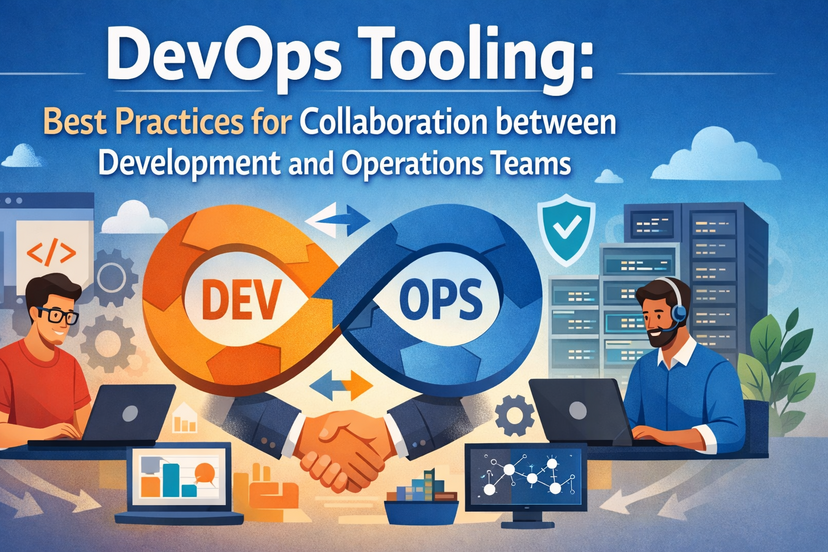
Speed is no longer a guarantee of success in software development in the contemporary world. The reality is that high-performing teams are not only characterized by how smooth the processes of development and operations are, this is where DevOps tooling is transformative. Through automation, visibility, cross-functionality the correct tools bridge the historical distance between development and operations and result in increased speed of delivery, higher reliability, and closer collaboration.
We have observed in PIT Solutions that carefully selected DevOps collaboration tools can make teams together, make communication easier, and establish the culture of shared responsibility. We are going to discuss how these tools and practices transform collaboration within the DevOps settings.
Understanding DevOps Tooling and Its Role in Team Collaboration
Every successful DevOps initiative begins with understanding the tools that make collaboration possible. This section looks at what DevOps toolingreally means and why it is such a vital bridge between technical teams.
What Is DevOps Tooling?
DevOps tooling refers to the ecosystem of platforms and services that support each phase of the software lifecycle. From planning to monitoring, they automate manual work and maintain consistency across teams.
Common tool categories include:
-
Planning tools for project tracking and sprint planning
-
Build and test tools for validation and automation
-
CI/CD tools for managing continuous delivery
-
Monitoring tools for feedback and performance analysis
When these elements work together, development flows naturally and collaboration feels effortless.
Why Collaboration Tools Are Key in DevOps
Technology can automate tasks, but people make progress. Development and operations collaboration tools provide shared spaces, dashboards, messaging apps, and workflow integrations where teams stay aligned. They reduce silos, improve response times, and keep everyone moving toward the same goal.
The Core Pillars of DevOps Collaboration
Behind every efficient DevOps setup lies a foundation of habits and principles that guide teamwork. These pillars define how teams communicate, share accountability, and continuously improve.
1. Shared Goals and Accountability
When development and operations aim for the same outcomes, collaboration becomes second nature. Teams that measure success with metrics like deployment frequency, change failure rate, and MTTR focus on progress instead of process.
2. Communication and Transparency
Instant communication is the glue that holds DevOps together. Tools like Slack, Microsoft Teams, and Mattermost keep discussions fluid, while dashboards and alerts provide visibility into real-time performance.
3. Continuous Integration and Continuous Deployment (CI/CD)
Automation through CI/CD pipelines bridges the gap between coding and deployment. Platforms such as Jenkins, GitLab CI, CircleCI, and GitHub Actions handle repetitive steps so teams can release confidently and often.
4. Automation and Infrastructure as Code (IaC)
Infrastructure as Code (IaC) keeps systems consistent and scalable. Tools like Terraform, Ansible, Chef, and Puppet let teams define environments through code, ensuring reliability across all stages.
5. Continuous Feedback and Monitoring
Feedback drives growth. With monitoring tools like Grafana, Prometheus, Datadog, and New Relic, teams gain insights into performance and spot problems early, keeping services stable.
Essential DevOps Tools That Enable Cross-Team Collaboration
Choosing the right tools can make or break a DevOps strategy. The development and operation collaboration tools plays a specific role in keeping projects on track, code secure and operations responsive.
1. Planning and Project Management Tools
Planning tools like Jira, Azure Boards, Asana, and Trello help teams stay organized. They bring transparency to priorities, progress, and workloads, ensuring no task slips through.
2. Version Control and Code Collaboration Tools
Version control systems, Git, GitHub, Bitbucket, GitLab, enable developers to collaborate safely. Shared repositories and pull requests promote peer review and cleaner code.
3. CI/CD and Automation Tools such as Jenkins, GitLab CI/CD, Bamboo, and ArgoCD manage builds, testing, and deployment automatically. This reduces manual effort and increases consistency.
4. Configuration Management and IaC Tools
Ansible, Chef, Puppet, and Terraform maintain stable environments across servers. Defining infrastructure in code prevents misconfigurations and simplifies scaling.
5. Containerization and Orchestration Tools
Containers, managed by Docker, Kubernetes, Helm, or OpenShift, keep applications consistent across environments. They allow teams to deploy faster and collaborate more effectively.
6. Monitoring, Logging, and Observability Tools
Observability tools like ELK Stack, Loki, Grafana, and Datadog bring all performance data together. With shared dashboards, teams track performance and spot issues before they escalate.
7. Communication and Incident Management Tools
Quick, clear communication is critical during incidents, and tools such as Slack, Opsgenie, PagerDuty, and Statuspage ensure teams coordinate efficiently when it matters most.
Best Practices for Effective DevOps Tooling and Collaboration
Technology alone is not enough and how teams use it makes the difference. The DevOps best practices help align tools, culture, and workflows for smoother collaboration.
Align Tools with DevOps Goals
Do not add tools just for variety. Pick those that integrate seamlessly with your setup and directly support your DevOps objectives.
Standardize Workflows
Use GitOps and shared CI/CD templates to maintain consistency across projects. Standardization simplifies onboarding and reduces human error.
Foster a Culture of Shared Responsibility
When developers and operations share accountability for outcomes, teamwork strengthens. Joint retrospectives and postmortems help build trust and understanding.
Automate Everything Possible
Automation keeps delivery cycles fast and dependable. From testing to monitoring, every automated step removes friction.
Enable Continuous Feedback
Link monitoring dashboards with communication tools to ensure feedback reaches the right people in real time. Rapid learning keeps systems improving.
Common Challenges and How to Overcome Them
Even with strong tooling, DevOps adoption can face roadblocks. Here is how to handle the most common ones.
-
Tool Overload: Keep toolsets lean and connected.
-
Siloed Data: Use shared dashboards to unify insights.
-
Security and Compliance: Build DevSecOps checks directly into pipelines.
-
Resistance to Change: Offer hands-on training and gradual rollouts.
-
Scalability: Rely on cloud-native solutions that grow with demand.
Measuring the Success of DevOps Collaboration
Tracking the right metrics helps teams understand what is working and where to adjust.
Focus on four key DORA metrics:
-
Deployment frequency
-
Lead-time for changes
-
Change failure rate
-
MTTR (Mean Time to Recovery)
These numbers reflect collaboration quality and pipeline health. Observability dashboards make it easy to track progress and adapt.
Future Trends in DevOps Collaboration and Tooling
DevOps continues to evolve toward smarter automation and deeper integration. The next few years will bring even stronger connections between teams and systems.
Key trends include:
-
AIOps for predictive incident management
-
GitOps and ChatOps for live, version-controlled collaboration
-
Self-healing systems that respond automatically to issues
-
Unified observability that merges logs, metrics, and traces
-
Security automation built directly into the CI/CD cycle
Together, these trends point toward a future where DevOps is not just efficient but intelligent.
Why Partner with an Expert DevOps Company
The selection of the appropriate partner can enable organizations to embrace DevOps at a quicker pace, with little growing pains. PIT Solutions is a company with more than 25+ years of expertise in end-to-end transformation of the digital world.
As a leading DevOps Consulting Company in UAE, and trusted IT solutions company, PIT Solutions delivers tailored strategies that align tools, culture, and automation for optimal results.
DevOps consulting experience includes CI/CD automation, Kubernetes orchestration, Infrastructure as Code, and cloud-native strategy. Making tools and culture co-evolve is the best way to have teams work in our experience. According to our research, there is always faster reliable delivery when there is an integrated workflow and when the responsibility is shared.
Having offices in the UAE, Switzerland, and India, PIT Solutions helps companies to create a scalable and secure DevOps system that will expand as the business expands.
Conclusion
A robust DevOps tooling setup brings teams, processes, and automation together on a single framework. When there is purposeful use of development and operations collaboration tools, they ease the communication process, accelerate delivery, and establish dependability that is sustainable.
Finally, the success of DevOps lies in the cooperation of teams and not only the type of technology they have applied. The most appropriate tools just facilitate that collaboration more effectively and easily.
As a trusted provider of DevOps Services in Switzerland, PIT Solutions helps organizations implement the right tools and practices for seamless collaboration and efficiency.
Contact us today to find out how PIT Solutions can help to streamline your DevOps journey.