



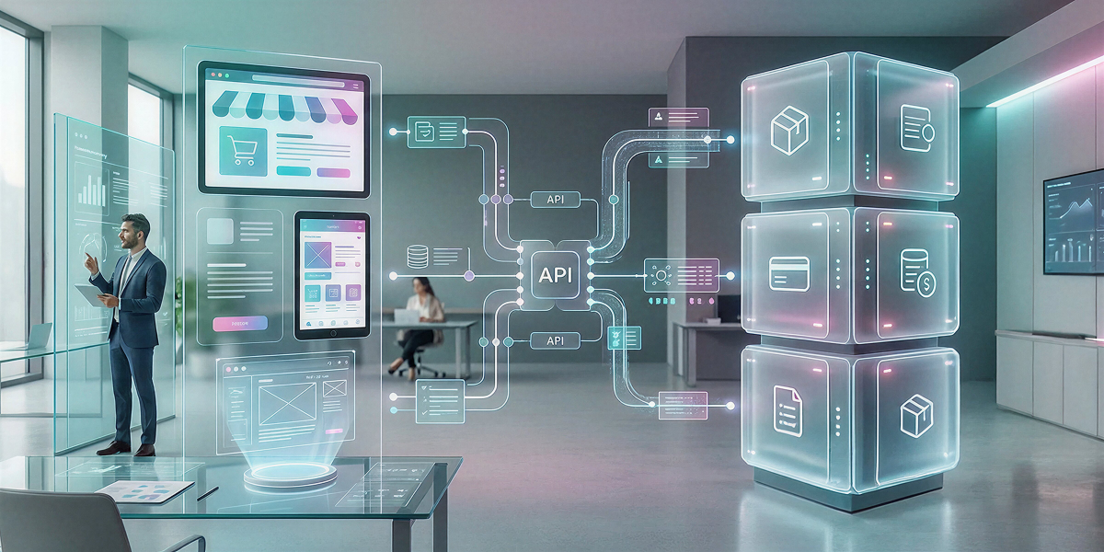
Headless and API-driven ecommerce development are reshaping digital retail as businesses demand faster, more scalable, and flexible platforms. Companies increasingly adopt API-driven ecommerce architecture to deliver seamless digital experiences across multiple channels. In our experience, organizations shifting from traditional systems to modern architectures achieve better performance and innovation speed. By separating frontend interfaces from backend services, headless commerce enables rapid development, improved integrations, and personalized customer journeys. Businesses implementing modern ecommerce architectures gain stronger scalability, improved user experiences, and greater competitive advantages in today’s evolving digital marketplace.
What is Headless Commerce in Ecommerce Development?
Headless ecommerce architecture refers to an ecommerce model where the frontend presentation layer is separated from backend commerce services. In our findings, this decoupled commerce platform allows developers to create unique customer experiences without affecting backend systems. Businesses can integrate multiple technologies through APIs that manage product catalogs, payments, and inventory operations. Popular platforms such as Shopify, Magento, and BigCommerce support flexible headless implementations. This architecture enables businesses to deliver faster digital storefronts, improve scalability, and build modern ecommerce platforms that adapt quickly to changing customer expectations.
How Headless Architecture Works
- Frontend presentation layer handles design, user interaction, and digital storefront experiences.
- Backend commerce engine manages products, orders, inventory, and transaction processing.
- APIs enable secure communication between frontend applications and backend services.
- Developers integrate tools using technologies like GraphQL or REST API.
Why Traditional Ecommerce Platforms Are No Longer Enough
Traditional monolithic ecommerce architecture tightly connects frontend and backend systems within one platform. While this structure worked in the past, modern businesses now demand greater flexibility and scalability. Based on our research, legacy ecommerce systems slow innovation and restrict integrations with modern tools. Companies pursuing digital commerce transformation increasingly adopt scalable ecommerce solutions that support rapid development and customization. Monolithic systems often require longer deployment cycles and limit personalization capabilities. Modern ecommerce platforms require flexible architecture to integrate advanced technologies, support omnichannel strategies, and deliver high-performance shopping experiences for customers.
How API-Driven Design Powers Modern Ecommerce Platforms
API driven ecommerce development plays a critical role in building modern digital commerce ecosystems. In our experience, API first commerce platforms allow businesses to connect multiple services through flexible integrations. APIs enable communication between ecommerce systems, payment gateways, content management tools, and search engines. Companies integrate services like Contentful, Stripe, Algolia, and CommerceTools to create powerful digital commerce ecosystems. This architecture improves scalability, supports rapid feature development, and enables businesses to innovate quickly while maintaining stable platform performance.
Headless Commerce vs Composable Commerce
Headless commerce focuses on separating the frontend from backend systems, while composable commerce in India introduces a modular architecture that combines independent services to build a complete ecommerce ecosystem. In our findings, composable commerce expands the headless concept by allowing businesses to assemble multiple technologies into a unified digital platform. Both approaches support flexibility and scalability, but composable commerce offers greater customization. Organizations implementing these architectures gain stronger control over technology stacks, improve system integrations, and accelerate digital commerce innovation across modern ecommerce platforms.
|
Feature |
Headless Commerce |
Composable Commerce |
| Architecture | Frontend separated from backend | Modular ecosystem of services |
| Integration | API based connections | Multiple microservices integrations |
| Flexibility | High | Extremely high |
| Customization | Flexible storefront design | Fully customizable technology stack |
Benefits of Headless Commerce for Modern Ecommerce Businesses
Businesses adopting headless ecommerce solutions experience significant advantages in performance, scalability, and user experience. In our experience, modern ecommerce brands prioritize speed, personalization, and seamless digital journeys. Headless architecture allows developers to build flexible storefronts while maintaining powerful backend systems. This separation improves website performance, supports omnichannel strategies, and enables continuous innovation. Companies using headless commerce can deliver personalized experiences across websites, mobile apps, and digital marketplaces. As ecommerce technology evolves, headless systems help businesses maintain competitive advantages by supporting faster innovation and improved digital commerce capabilities.
Faster Website Performance
- CDN support delivers faster website loading across global regions.
- Optimized frontend frameworks improve page speed significantly.
- High performance enhances user engagement and conversions.
- Faster websites strengthen overall search engine optimization results.
Better SEO Performance
- Improved page speed increases search engine visibility.
- Flexible architecture supports advanced technical SEO optimization.
- Structured data integration becomes easier for developers.
- Search engines prioritize fast and responsive websites.
Omnichannel Commerce Experience
- Businesses connect ecommerce websites, mobile apps, and marketplaces.
- Digital commerce expands to IoT devices and smart platforms.
- Customers enjoy consistent shopping experiences across channels.
- Companies implement a strong omnichannel ecommerce strategy.
Design Flexibility
- Developers create fully customized UI and UX experiences.
- Businesses personalize digital storefronts for branding.
- Modern frameworks allow creative design implementations.
- Companies maintain complete control over frontend experiences.
Technology Stack for Headless Ecommerce Development
A modern ecommerce technology stack combines powerful frontend frameworks, scalable backend platforms, and advanced integrations. In our findings, developers often use technologies such as React, Next.js, and Vue Storefront to build fast digital storefronts. Backend platforms like Shopify and Magento manage core commerce functions. Integration services such as Stripe, Algolia, and Contentful support payments, search, and content management. This ecosystem enables flexible development and helps businesses build scalable, high-performance ecommerce platforms that support modern digital commerce experiences.
Real-World Use Cases of Headless Commerce
Headless commerce enables organizations to create flexible ecommerce ecosystems capable of supporting diverse business models. In our experience, enterprises adopt this architecture to deliver personalized customer experiences and scalable digital infrastructure. Businesses benefit from faster innovation cycles and improved integration capabilities. Headless systems allow organizations to build advanced digital platforms that support global operations and complex ecommerce requirements while maintaining high performance and scalability across multiple digital channels.
Common Use Cases
- B2B ecommerce platforms with complex product catalogs and pricing structures.
- Direct-to-consumer brands delivering personalized shopping experiences.
- Enterprise retail platforms managing global ecommerce operations.
- Multi-store ecosystems supporting international digital commerce.
Challenges of Implementing Headless Ecommerce
Despite its advantages, implementing headless architecture presents certain technical challenges. Based on our research, organizations often face integration complexity and higher initial development costs. Businesses must hire experienced developers capable of managing distributed systems and API integrations. However, companies that successfully implement headless systems gain long-term benefits such as improved scalability, faster platform performance, and enhanced customer experiences. Careful planning and strategic technology selection are essential to ensure successful adoption of headless ecommerce platforms.
Why Businesses in India Are Adopting Headless Ecommerce
India’s ecommerce industry is growing rapidly as companies seek advanced ecommerce solutions India to stay competitive. Mobile-first consumers demand fast, personalized shopping experiences, driving adoption of headless architectures. Implementing these platforms gives businesses flexibility, scalability, and faster innovation cycles. By leveraging modern technologies, organizations adopting digital commerce strategies can deliver seamless omnichannel experiences, optimize operations, and provide high-performance digital retail solutions that meet evolving customer expectations and support long-term business growth.
How PIT Solutions Helps Build Headless Ecommerce Platforms
PITSolutions helps businesses implement modern ecommerce architectures designed for scalability and performance. In our experience, organizations partnering with PITSolutions benefit from expert developers, innovative technologies, and reliable digital commerce solutions. The company builds flexible ecommerce platforms that support long-term growth and advanced integrations.
Services Offered
- Custom headless ecommerce development aligned with business objectives.
- API integrations supporting modern digital commerce systems.
- Composable commerce implementation for scalable platforms.
- Digital transformation consulting for enterprise ecommerce growth.
Contact Us Now to build a powerful ecommerce platform powered by modern digital commerce technologies.
FAQ Section
- What is headless commerce in ecommerce?
Headless commerce is an ecommerce architecture where the frontend interface is separated from the backend system and connected through APIs. - How does API-driven ecommerce architecture work?
API-driven ecommerce architecture connects different services like payment gateways, CMS, and inventory systems through APIs to enable seamless integration. - What are the benefits of headless ecommerce development?
Headless ecommerce development offers faster website performance, better scalability, flexible design, and improved omnichannel customer experiences. - Is headless commerce better than traditional ecommerce platforms?
Headless commerce is often better than traditional platforms because it provides greater flexibility, customization, and scalability for modern digital commerce needs. - What technologies are commonly used in headless ecommerce solutions?
Headless ecommerce solutions are often developed using technologies like React, Next.js, Shopify, Magento, GraphQL, Stripe, and Contentful
Conclusion – Future-Proof Your Ecommerce Strategy with Headless Commerce
Headless ecommerce development continues to transform digital commerce by enabling flexible, scalable, and high-performance platforms. Businesses implementing API driven ecommerce development integrate advanced technologies, improve customer experiences, and support omnichannel growth. In our findings, organizations adopting modern ecommerce architecture achieve stronger scalability and faster innovation. Companies searching for a reliable ecommerce development company Dubai can partner with PITSolutions for expert Ecommerce Development Services and build future-ready headless ecommerce platforms.
Contact Pit Solutions now to build scalable headless ecommerce platforms, accelerate digital innovation, enhance customer experiences, and future-proof your business growth.