


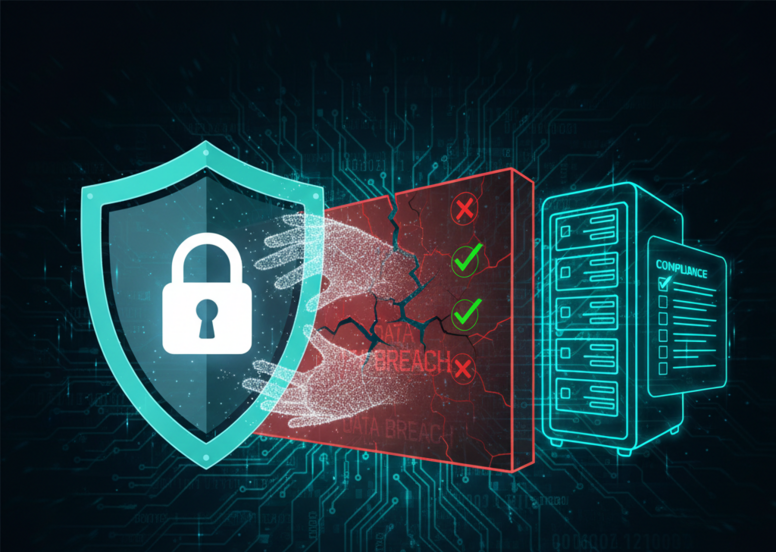
Data breaches rarely happen overnight. Attackers typically take advantage of flaws that have been there for weeks or even months without anyone noticing. Cybercriminals frequently use unpatched systems, improperly configured servers, insecure APIs, and weak access controls as entry points.
Organisations can find these hidden vulnerabilities before they are exploited by conducting regular VAPT. Businesses can proactively improve their security posture and lower their exposure to cyber threats instead of responding to incidents. At PIT Solutions, we help organizations implement structured and continuous VAPT programs that strengthen their overall security resilience.
Beyond security protection, VAPT also plays a critical role in meeting compliance requirements. Periodic security testing is required by many regulatory frameworks to make sure businesses adequately protect sensitive data. Without regular testing, compliance gaps can result in audit failures, penalties, and reputational damage.
What Is VAPT and Why It Is Essential for Modern Businesses
VAPT combines two complementary security approaches:
-
Vulnerability Assessment identifies and categorizes security weaknesses across systems, networks, and applications.
-
Penetration Testing simulates real-world attacks to validate whether those vulnerabilities can be exploited.
Together they offer a thorough and accurate picture of the security posture of an organization.
Modern IT environments include cloud platforms, hybrid networks, SaaS applications, remote endpoints, and third-party integrations. This complexity significantly increases the attack surface. Regular VAPT ensures that security controls adapt to changes in infrastructure.
How Regular VAPT Prevents Data Breaches
Most breaches occur due to overlooked vulnerabilities rather than highly advanced attacks. Regular testing reduces this risk significantly.
Early Identification of Critical Vulnerabilities
Routine VAPT helps detect:
-
Unpatched operating systems and applications
-
Weak authentication mechanisms
-
Misconfigured cloud storage
-
Exposed services and open ports
-
Insecure APIs
Identifying these issues early prevents attackers from exploiting them.
Real-World Attack Simulation
Penetration testing goes beyond automated scanning. It simulates real attacker behavior such as:
-
Privilege escalation
-
SQL injection attacks
-
Cross-site scripting
-
Credential harvesting
-
Lateral movement within networks
This evaluates potential impact and validates whether vulnerabilities are exploitable.
Reduced Attack Surface
Regular assessments ensure that:
-
Unnecessary services are disabled
-
Excessive permissions are removed
-
Default credentials are eliminated
-
Security patches are applied on time
By reducing the attack surface, organizations make it significantly harder for attackers to succeed.
How Regular VAPT Prevents Compliance Failures
Security compliance is not a one-time checklist. It requires continuous monitoring, validation, and documentation.
Many regulatory frameworks require periodic testing, including:
-
ISO 27001
-
SOC 2
-
HIPAA
-
PCI-DSS
-
GDPR
Failing to conduct regular security assessments can result in non-compliance findings during audits. With structured VAPT programs delivered by PIT Solutions, organizations gain documented validation that strengthens their compliance posture.
Supports Audit Readiness
Regular VAPT provides:
-
Documented evidence of risk assessments
-
Identified vulnerabilities and remediation actions
-
Risk prioritization reports
-
Re-testing validation results
This demonstrates proactive risk management during compliance audits.
Validation of Security Controls
Controls must be implemented effectively for compliance frameworks to function. VAPT confirms if:
-
Access control mechanisms function correctly
-
Encryption is properly configured
-
Monitoring and logging systems are active
-
Network segmentation is enforced
Without testing, controls may exist only in documentation, not in practice.
Reduced Financial and Legal Exposure
Failures to comply can result in:
-
Regulatory penalties
-
Lawsuits
-
Loss of business contracts
-
Customer trust decline
Frequent testing lowers these risks and improves the credibility of businesses.
When Should Organizations Conduct VAPT?
Security testing should be conducted at least annually, and additionally after major infrastructure changes, cloud migrations, application updates, or before compliance audits. Security threats are evolving along with technology. A one-time assessment is not enough in a threat landscape that is constantly changing.
Businesses are far more equipped to stop breaches and stay in compliance with regulations when they incorporate VAPT into their continuous security plan.
Partnering for Proactive VAPT: Protecting Your Business and Reputation
The financial and operational impact of a data breach often exceeds the cost of preventive security testing. In addition to monetary losses, breaches damage a brand's reputation and lower consumer trust. However, noncompliance can lead to audit results, fines, contract losses, and legal risks.
Automated scanning tools are not enough for effective VAPT. It requires knowledgeable security experts who are aware of contemporary cloud architectures, industry compliance standards, and attacker behavior.
A specialised security partner like PIT Solutions delivers advanced testing techniques, comprehensive reporting, actionable remediation guidance, and structured re-testing support through our Managed Cybersecurity Services. This ensures that vulnerabilities are identified, effectively remediated, and validated for long-term security resilience.
Regular VAPT transforms cyber security from reactive incident response to proactive risk management. It strengthens defenses, ensures compliance readiness, and protects critical business assets.
If your organization has not conducted a recent VAPT assessment, now is the time to act.
Schedule a VAPT Assessment with PIT Solutions today and strengthen your security posture with confidence.