



The analytics ecosystem is defined by real-time intelligence, automation and unified data visibility. Odoo Business Dashboards serve as a strategic nerve center where enterprises monitor performance, predict outcomes and act with precision. With upgrades across Odoo 17, 18 and 19, the platform delivers a robust generation of dashboards that blend automation, cross-module analytics and enhanced modeling into a single cohesive experience. By converting complex data into usable insights, Odoo dashboards enable teams to track KPIs, make faster decisions and scale operations with greater control. This guide outlines how modern dashboards create tangible business value and highlight the industry-specific advantages of Odoo Dashboards across major sectors.
Why Dashboards Are Critical for Business Success in 2026
Real time decision-making now drives enterprise performance and leaders expect instant access to KPIs, insightful trends and automated reporting. This shift makes dashboards a core engine of operational clarity and highlights the growing benefits of Odoo dashboards across modern organisations. With enhanced analytics, unified ERP reporting and efficient cross department data flows, dashboards have become essential to digital first execution. As a leading ERP ecosystem, Odoo accelerates this evolution by delivering integrated BI capabilities that offer unified analytics, real time visibility and scalable intelligence across the organisation.
What’s New in Odoo Business Dashboards in 2026?
The latest dashboard upgrades in Odoo bring a faster and more connected analytics experience. Recent enhancements focus on richer visualizations, real time data flows and deeper cross module integration. The outcome is a dashboard system that helps teams move from simple reporting to truly insightful and data driven decision making.
Enhanced Dashboards with Advanced Analytics
Odoo’s latest capabilities include improved data analysis tools, such as dynamic pivots and new chart types, enabling teams to uncover patterns and make informed decisions with greater precision. Advanced Visualizations and Dynamic Chart Types Enhanced visual tools such as heatmaps (via conditional formatting), funnel charts, Gantt-based KPIs, cohort retention views and multi axis graphs deliver deeper analytical clarity. These dynamic formats make it easier for decision makers to interpret complex patterns and compare performance across multiple dimensions. Unified Cross-Module Dashboarding Odoo merges CRM, Sales, Inventory and Finance KPIs into a single unified dashboard without requiring module switching. This consolidated view accelerates decision making by giving teams a centralized and consistent source of truth for all operational metrics.
Enhanced Mobile Dashboard Experience
The mobile dashboard interface has been refined for smoother navigation and fully adaptive and touch optimized charts. These improvements ensure that remote and active users can access critical insights quickly and confidently.
Faster Performance with Real-Time Data Refresh
Dashboards refresh efficiently through on-demand data pulls, keeping metrics synchronized with ongoing business activity. This responsive data flow enhances operational responsiveness and enables leaders to act on the latest information.
Core Benefits of Odoo Business Dashboards for Modern Enterprises
Odoo Business Dashboards give organisations the clarity and speed they need to make confident, data led decisions. They bring real-time KPIs, automated insights and unified analytics into one place, helping teams work faster and drive measurable performance gains. These benefits make Odoo Dashboards a powerful choice for enterprises aiming to scale with precision and efficiency. 1. Real-Time KPI Tracking for Agile Decision-Making Real-time visibility into KPIs gives leaders the clarity they need to respond quickly and steer performance in the right direction. Live metrics ensure decisions are always informed by the latest operational data. 2. Role-Based Custom Dashboards for Every Team Odoo enables personalized dashboards for CEOs, sales leaders and finance teams, ensuring each role sees the insights that matter most. This targeted visibility improves focus, accountability and performance alignment across the organisation. 3. Seamless Integration with All Odoo Modules Dashboards pull data directly from Odoo CRM, Sales, Finance and Manufacturing, providing a unified analytics layer across business functions. This removes data silos and creates a single source of truth for strategic decisions. 4. Enhanced Collaboration and Transparency Shared dashboards and team level visibility improve coordination and keep departments aligned on goals and performance. This transparency accelerates execution and builds a culture of data driven teamwork 5. Automation-Ready Insights for Efficiency Odoo delivers insights that trigger smart alerts, automated approvals and actionable recommendations. These automation ready signals reduce manual work and accelerate operational workflows. 6. Cost-Effective and Scalable Dashboarding System Built for cloud scalability, Odoo analytics dashboards handle growing data volumes while keeping operational costs under control. The system supports long-term expansion without expensive infrastructure upgrades.
Deep Dive into Odoo Dashboard Features: What Makes Them Stand Out?
Odoo’s dashboards offer a high level of analytical intelligence, combining flexible design, deeper data control and faster insights. With upgraded tools for visualization, drill down analysis and automated reporting, these benefits of Odoo dashboards give teams the clarity and speed needed to make smarter, more confident decisions.
Multi-Level Filters and Intelligent Drill Down
Multi-level filters let users slice data by region, product or time period for more precise analysis. Intelligent drill down tools helps teams uncover deeper trends and patterns, turning surface level metrics into meaningful insights.
Embedded Pivot Tables, Spreadsheets and List Views
Dashboards support embedded pivot tables, spreadsheet formulas and list views to enable advanced analysis directly within the interface. Users can run calculations, compare metrics and explore data from different perspectives without switching modules.
Comparative Analysis Tools
Odoo provides built in tools for period over period comparisons and forecast versus actual evaluations. These capabilities help teams measure performance accurately and improve future planning.
Alerts, Notifications and Scheduled Reports
Automated email and SMS alerts keep teams informed of important changes as they happen. Scheduled reporting ensures insights reach stakeholders consistently, improving transparency and operational coordination.
Security and Access Control Enhancements
Enhanced access controls let administrators assign user groups, manage permissions and track activities through audit trails. These features protect sensitive business data and strengthen overall governance.
Industry-Specific Advantages of Odoo Business Dashboards
Different industries demand different forms of visibility and Odoo Business Dashboards adapt to each operational model with precision. By combining real time metrics, advanced insights and unified cross-module data, Odoo gives every sector the intelligence needed to optimise performance and scale efficiently. These industry-specific advantages of Odoo Dashboards translate complex workflows into actionable KPIs, making them a strategic asset for any industry navigating high competition and data driven decision making.
Retail and E-Commerce Dashboards
Retail teams can track essential KPIs such as inventory turnover, cart abandonment and weekly sales velocity to understand buying patterns and optimize merchandising. With stock insights and segmented sales performance, businesses can respond faster to demand shifts and reduce stockouts. These dashboards integrate seamlessly with Odoo POS, Website and Inventory modules for unified visibility.
Manufacturing and Industrial Dashboards
Manufacturers benefit from KPIs including OEE, machine downtime and production cost variance to maintain operational efficiency. Dashboards enable real time shop floor monitoring and support predictive maintenance to prevent costly disruptions. Built on Odoo MRP, Maintenance and Quality, they deliver a comprehensive production intelligence layer.
Logistics and Supply Chain Dashboards
Supply chain teams rely on delivery lead time, route efficiency and warehouse utilization KPIs to improve operational flow. Advanced dashboards help optimize routes, manage stock requirements and strengthen fulfillment accuracy. These insights leverage the capabilities of Odoo Inventory and Fleet Management for comprehensive logistics visibility.
Professional Services and Agencies
Service organizations monitor project profitability, billable hours and resource allocation to ensure profitable project delivery. Dashboards improve team utilization and client satisfaction through clearer visibility of workloads and timelines. Integrated with Odoo Projects and Timesheet, these insights support stronger project governance.
Finance and Accounting Teams
Finance departments track cash flow, aging reports and net profit margins to strengthen fiscal control. Dashboards simplify financial consolidation and provide tax compliant insights for accurate reporting. Powered by Odoo Accounting, they offer transparent and actionable financial intelligence.
Healthcare and Clinics
Healthcare dashboards display patient flow, utilization ratios and appointment efficiency, enabling data driven care delivery. This helps clinics manage capacity, reduce waiting times and enhance service quality. These insights are built on Healthcare modules and CRM for unified patient management.
Education and Universities
Educational institutions rely on KPIs such as enrollment funnels, exam results and attendance scores to evaluate academic performance. Dashboards support data backed planning for admissions, curriculum outcomes and student engagement. They integrate with Education, Attendance and HR modules.
Hospitality and Real Estate
Hospitality and real estate operators analyze occupancy rates, revenue per booking and conversion rates to optimise revenue and forecasting. Dashboards guide decisions on pricing, marketing and property performance. Built on PMS dashboards and Odoo CRM, they offer clear visibility across locations and portfolios.
How to Create High-Impact Odoo Dashboards (Best Practices)
Building an effective dashboard requires more than attractive charts, it demands clarity, relevance and alignment with business objectives. High impact Odoo Dashboards focus on the right KPIs, intuitive layouts and clean data foundations, ensuring every metric drives informed action. The following best practices help teams design dashboards that are both strategic and easy to use.
Choose KPIs That Align with Strategic Goals
Selecting KPIs that directly support your organisation’s strategic objectives ensures dashboards remain focused and actionable. When metrics reflect core priorities, teams can track progress with accuracy and make decisions that move the business in the right direction.
Maintain Minimalistic but Actionable Layouts
A clean and minimalistic dashboard layout enhances readability and helps users concentrate on essential insights. By presenting only high value metrics, teams avoid clutter and gain clarity on what requires immediate attention.
Use Filters and Segmentation Smartly
Intelligent filtering enables deeper analysis by breaking down data across regions, products or time periods. Smart segmentation helps users uncover hidden patterns and trends, making dashboards far more insightful.
Combine Multiple Chart Types for Balanced Insights
Using different chart types creates a balanced visual narrative and allows teams to interpret data from multiple angles. Whether trend lines, heatmaps or comparison graphs, varied visuals lead to stronger analytical outcomes.
Automate Reports and Alerts for Consistency
Automating routine reports and alert notifications ensures teams receive critical updates without delay. This consistency improves responsiveness and keeps every unit aligned with the most current performance indicators.
Ensure Data Quality Before Dashboarding
Accurate dashboards depend on clean, reliable and validated data at the source. Establishing strong data hygiene practices prevents inaccuracies and strengthens trust in the insights delivered across the organisation
Common Dashboard Challenges & How Odoo Solves Them
1. Data Silos Most organizations struggle with disconnected systems that limit visibility. Odoo resolves this through centralized integration, ensuring every module feeds data into a unified dashboard ecosystem.
2. Delayed Reporting Traditional ERPs refresh data slowly, affecting timely decisions. Odoo eliminates this issue with highly efficient synchronization, enabling quick access to KPIs and operational metrics.
3. Manual KPI Creation Building KPIs manually consumes time and often introduces errors. Odoo automates KPI generation using intuitive tools, surfacing insights efficiently.
4. Low Dashboard Adoption Employees often avoid dashboards that feel complex or unintuitive. Odoo improves adoption with a user-friendly UI, offering clean navigation, customizable layouts and simplified interactions.
5. Inconsistent or Poor-Quality Data Mismatched data affects reporting accuracy. Odoo enforces data cleaning and validation processes, ensuring dashboards reflect consistent, reliable information across the ERP.
Odoo Dashboards vs Other ERP Dashboards (SAP, NetSuite, Zoho)
A quick comparison of Odoo against leading alternatives:
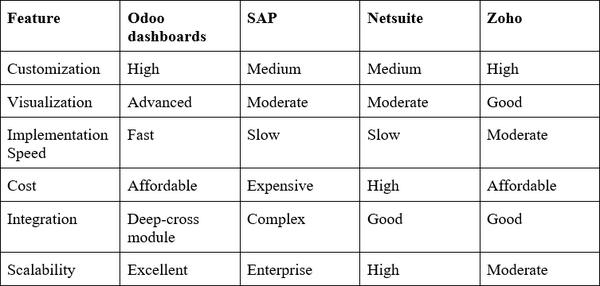
Odoo dashboards outperform many traditional ERP alternatives by offering stronger customization, richer visual analytics and deeper cross module integration at a far more affordable cost. While SAP and NetSuite deliver enterprise capabilities, they often require heavier investments and complex setups. Zoho provides good flexibility, but Odoo stands ahead with more advanced AI features and superior scalability. For organisations seeking a modern and cost-efficient analytics layer, Odoo delivers a balanced advantage across performance, usability and long-term growth
Conclusion: Why Odoo Dashboards Are a Strategic Investment
Odoo Business Dashboards have evolved into a core intelligence layer for modern enterprises, helping teams make faster decisions, improve KPI visibility and run operations with greater accuracy. With advanced analytics, cross module insights and real time data sync, Odoo offers a robust reporting ecosystem that supports sustainable growth. For organizations looking to modernize their ERP structure, PIT Solutions provides comprehensive implementation and customization expertise, ensuring high impact dashboard experiences. To explore more, connect with our IT solutions company or learn about our specialized Odoo services in UAE for diverse industries.