



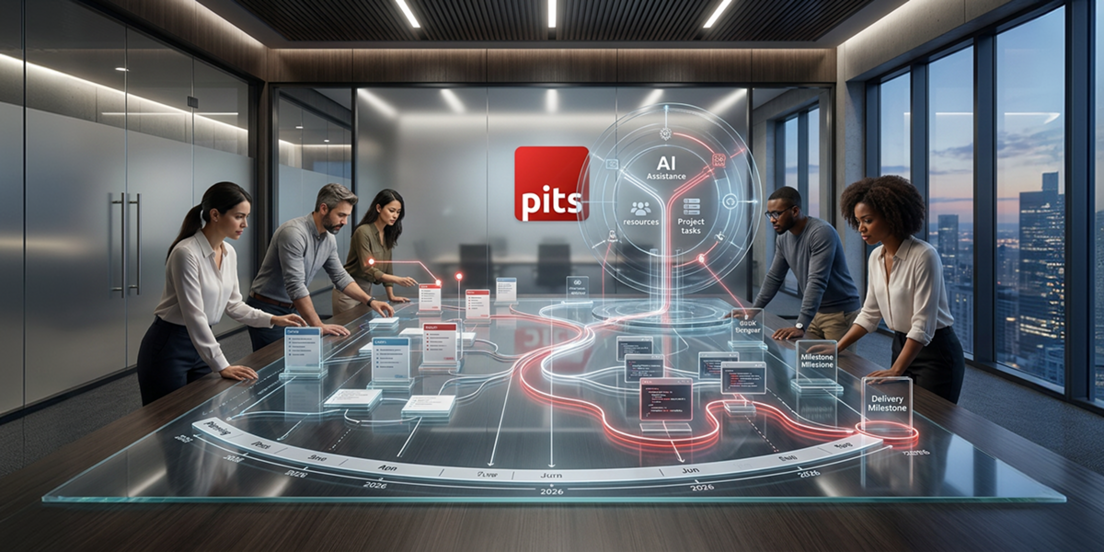
What Is AI-Assisted Software Development?
Over the last two years, AI-assisted software development has changed the software industry faster than any technology shift I have witnessed in my 15+ years of software development services and project management. Today, a developer can create a working application, generate APIs, design interfaces, write documentation, and even deploy a prototype within hours. Tasks that previously required days or weeks can now be completed in a fraction of the time. While this productivity gain is real, many organizations are beginning to make a dangerous assumption: “If AI can generate software quickly, project estimation, architecture, code reviews, and engineering processes are no longer important.”
In my opinion, this is where many teams are heading in the wrong direction. The challenge is no longer generating code. The challenge is building maintainable, scalable, secure, and reliable software that can survive years of enhancements and production usage. At PIT Solutions, we see this firsthand: AI can speed up development, but it doesn’t replace the solid engineering practices needed to build software that is reliable, scalable, and ready for real-world use.
The Rise of Vibe Coding in Software Development
A new trend called “vibe coding” has become increasingly popular. The concept is simple:
-
Describe the requirement to an AI tool.
-
Accept the generated code.
-
Keep refining prompts until the application works.
-
Ship it.
For prototypes, proof-of-concepts, internal tools, and personal projects, this approach can be extremely effective. However, the situation changes completely when the software:
-
Handles customer data
-
Processes payments
-
Stores medical information
-
Supports thousands of users
-
Requires long-term maintenance
-
Must meet security and compliance requirements
Several industry discussions and studies have highlighted that AI-generated code can introduce security vulnerabilities, architectural inconsistencies, duplicated logic, and technical debt when proper review processes are skipped. AI can generate functional code quickly, but functionality alone does not guarantee maintainability or quality.
My view is simple: Vibe coding has a place in custom software development, but production systems that handle real user data require engineering discipline.
How AI Creates Unrealistic Software Development Expectations
Many clients are hearing success stories such as:
-
“An app was built in a day.”
-
“AI generated the entire platform.”
-
“Development teams are no longer needed.”
These stories create unrealistic expectations. What clients often see is a working demo. What they don’t see is:
-
Security reviews
-
Architecture decisions
-
Database design
-
Performance optimization
-
Scalability planning
-
Regression testing
-
Production monitoring
-
Future maintenance costs
A working prototype and a production-ready system are two very different things. AI can dramatically accelerate the first. It does not automatically solve the second. In fact, some organizations are discovering that the long-term maintenance burden increases when AI-generated code is introduced without proper review and governance. Productivity gains during implementation can later be offset by debugging, refactoring, and technical debt cleanup.
AI Can Build Prototypes Quickly - But Production Software Requires More
With modern AI agents like GitHub Copilot, it is entirely possible to create:
-
An e-commerce website
-
A CRM prototype
-
A booking platform
-
An admin dashboard
-
A mobile application prototype
within a single day. This is an incredible achievement. However, software success should not be measured by: “How quickly was version 1 built?” Instead, it should be measured by: “Can the system still be maintained, enhanced, and scaled two years from now?”
The real questions begin after deployment:
-
Can another developer understand the code?
-
Can bugs be fixed efficiently?
-
Can new features be added safely?
-
Can security vulnerabilities be identified?
-
Can the system handle growth?
Speed is valuable. Sustainability is critical.
Why Project Estimation Still Matters in AI-Assisted Development
Some people believe AI will eliminate the need for software development estimation. I disagree. Project estimation remains essential because software delivery involves much more than coding. Traditionally, project estimates included:
-
Requirement analysis
-
Architecture design
-
Database design
-
Development
-
Software testing
-
Deployment
-
Documentation
With AI application development, the development portion can be significantly reduced. In many cases, I have observed development effort reductions of up to 70% for well-defined tasks. However, the remaining activities still require substantial effort:
-
Prompt preparation
-
Requirement clarification
-
AI output validation
-
Code reviews
-
Security reviews
-
Integration testing
-
User acceptance testing
-
Production support
Therefore, estimation should evolve-not disappear.
Module-Based Estimation for AI-Assisted Software Development
Instead of estimating individual coding activities, I recommend continuing with a module-based estimation approach. For each module:
-
Requirement Analysis : Understand the business need clearly.
-
Architecture Definition : Define boundaries, responsibilities, and integration points.
-
AI In Software Development : Use AI tools to accelerate implementation.
-
Code Review : Allocate additional effort for reviewing AI-generated code.
-
Testing : Validate business workflows and user experience.
-
Deployment and Monitoring : Ensure production readiness.
The difference today is that development effort decreases while review and validation effort becomes more important in an AI-driven SDLC.
Why Prompt Engineering Matters in AI-Assisted Development
Prompt engineering is becoming a core AI software development skill. A good prompt should clearly define:
-
Business requirements
-
Existing functionality
-
Files to modify
-
Files not to modify
-
Acceptance criteria
-
Coding standards
-
Security requirements
Poor prompts often result in:
-
Broken functionality
-
Inconsistent implementations
-
Duplicate logic
-
Increased review effort
In many teams, the quality of prompts is becoming as important as the quality of code itself. Research on AI-generated code quality also highlights prompt design and developer expertise as major factors influencing outcomes.
Managing Software Development Teams in the AI Era
AI is not reducing the need for experienced developers. It is changing how they create value. Traditionally, senior developers spent much of their time writing code. Today, their responsibilities increasingly include:
-
Defining architecture
-
Creating development guidelines
-
Reviewing AI-generated outputs
-
Mentoring team members
-
Validating business logic
-
Maintaining code quality
The role of project managers is also changing. Instead of measuring productivity by lines of code or development hours, managers must focus on:
-
Quality of delivery
-
Maintainability
-
Review effectiveness
-
Defect reduction
-
Business outcomes
The most successful teams are not necessarily the ones generating the most code. They are the ones generating the most reliable software.
Software Testing in the Age of AI-Assisted Development
One interesting observation is that strong guidelines and review processes can significantly reduce testing effort. If teams establish:
-
Coding standards
-
Architectural patterns
-
Prompt templates
-
Mandatory code reviews
-
Automated validation checks
then many functional defects can be eliminated before reaching QA. In such environments, testing can focus more heavily on:
-
User experience
-
UI consistency
-
Workflow validation
-
Cross-platform behavior
-
Edge cases
This does not eliminate testing. It shifts testing effort toward areas where human judgment provides the most value.
Conclusion
AI-assisted software development is one of the most powerful productivity accelerators our industry has ever seen. However, software engineering is not simply about generating code. It is about creating systems that are secure, maintainable, scalable, and understandable.
The organizations that succeed with AI will not be the ones that generate code the fastest. They will be the ones that establish strong guidelines, maintain rigorous review processes, invest in architecture, and adapt their project management practices to the realities of AI in software development. The future belongs neither to traditional development nor to pure vibe coding. It belongs to teams that successfully combine AI speed with engineering discipline.
Looking for a solution tailored to your specific requirements? Contact PIT Solutions to explore high-quality applications designed around your business needs.