




Cybersecurity is now an essential business requirement, not an option. Organizations that neglect security increase their exposure to disruption, financial loss, and reputational damage.
The scope and complexity of cyber threats are growing rapidly as businesses adopt cloud platforms, remote work, and interconnected technologies. Ransomware attacks can disrupt operations overnight, while phishing continues to exploit human error. Hidden vulnerabilities in supply chains, cloud environments, and insider activity are often overlooked until it’s too late.
Negligence has serious consequences, including loss of customer trust, operational disruption, regulatory penalties, and data breaches. Without a proactive strategy, organizations struggle to prevent, detect, and recover from these threats.
Strong cybersecurity measures are essential to protect digital assets and ensure business continuity. This includes adopting security frameworks, enforcing access controls, conducting vulnerability assessments, and implementing continuous monitoring and incident response.
At PIT Solutions, we build and implement customized cybersecurity strategies aligned with business goals and regulatory requirements, helping organizations stay ahead of threats and operate with confidence.
Cyber Threats and Common Vulnerabilities
Today’s cybercriminals are faster, smarter, and more persistent than ever. Using automation, artificial intelligence, and advanced tools, they continuously search for vulnerabilities, making every organization regardless of size or sector a potential target.
It is no longer a question of if your organization will be targeted, but when. Many attacks occur silently and remain undetected until damage is already done.
They scan networks, applications, cloud environments, and endpoints, looking for even the smallest gap. A single overlooked vulnerability can enable unauthorized access, data theft, operational disruption, or financial extortion.
Organizations become highly exposed when critical security gaps exist, such as:
- Unpatched vulnerabilities: Known weaknesses left open to immediate exploitation
- Weak or reused passwords: Increase the risk of credential compromise
- Misconfigured cloud environments: Expose sensitive data and critical services
- Poor access control practices: Grant excessive or unmanaged privileges
- Lack of continuous monitoring: Allows threats to remain undetected for long periods
- Outdated or legacy systems: No longer receive security updates
- Low employee awareness: Increases susceptibility to social engineering attacks
These gaps are not minor oversights they are direct entry points. Attackers use them to gain initial access, escalate privileges, move laterally, and take control of critical assets.
Organizations face increasingly aggressive attack vectors such as:
- Phishing attacks: Steal credentials, deliver malware, or manipulate users
- Ransomware attacks: Disrupt operations and cause severe financial and reputational damage
- Supply chain attacks: Exploit trusted vendors and third-party integrations
- Insider threats: Arise from malicious intent, negligence, or human error
- Credential theft and account compromise: Enable unauthorized system access
- Cloud-based attacks: Target weak identities, insecure APIs, and misconfigurations
The reality is clear organizations that delay action are not reducing risk they are accumulating it. Every unaddressed vulnerability increases the likelihood of a breach, amplifies impact, and extends recovery time.
Proactive cybersecurity is no longer optional; it is the difference between controlled risk and uncontrolled impact.
Business Impact of Cybersecurity Incidents
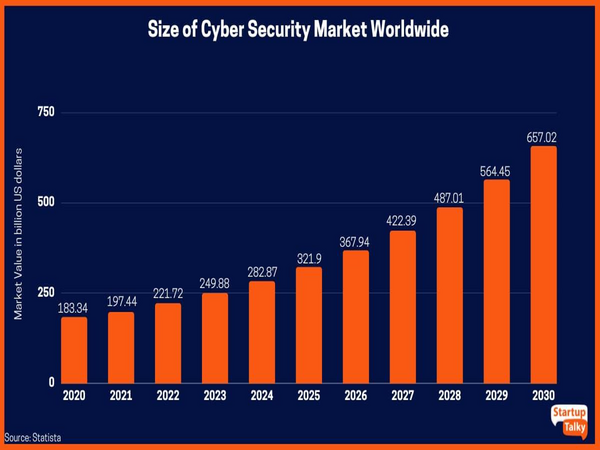
A cyber incident is not just an IT issue it is a business crisis. Organizations that delay action often face the consequences when it’s already too late.
Attacks such as ransomware, data breaches, insider threats, and supply chain compromises can disrupt operations, expose sensitive data, and damage trust within hours. The impact doesn’t stay contained it spreads across the entire business.
Organizations may face:
- Operational downtime: Disrupts services and productivity
- Financial losses: From ransom, fraud, recovery, and legal costs
- Regulatory penalties: Due to compliance failures
- Data and intellectual property loss: Affecting long-term value
- Reputational damage: Leading to loss of customer trust
- Supply chain disruption: Impacting partners and business continuity
A single incident can cause long-term financial, operational, and strategic damage.
Beyond immediate impact, cyber incidents expose deeper gaps in security, governance, and response readiness, making recovery slower and more expensive.
Cybersecurity alone is no longer enough. Organizations must build cyber resilience, the ability to anticipate, withstand, and recover from attacks while maintaining critical operations.
Delaying action only increases risk.
Cybersecurity Risks by Business Size
Cyber threats don’t target size they target weakness. As organizations grow, so does their exposure. Delaying security measures increases the impact of an inevitable attack.
Small Businesses
Small businesses are frequent targets because attackers expect weaker defenses. One successful breach can disrupt operations or cause irreversible damage.
Organizations must prioritize:
- Multi-Factor Authentication (MFA): Prevents unauthorized access even if passwords are compromised
- Regular data backups: Ensures quick recovery from ransomware or data loss
- Employee awareness training: Reduces risk of phishing and social engineering attacks
- Basic access controls: Restricts access to sensitive data on a need-to-know basis
- Patch management & endpoint security: Fixes known vulnerabilities before exploitation
- Incident response planning: Minimizes downtime and improves recovery speed
Ignoring these basics leaves small businesses highly vulnerable to avoidable attacks.
Medium-Sized Enterprises
As businesses grow, their systems become more complex and so do the threats. Basic controls are no longer enough to manage expanding risk.
Organizations should implement:
- Structured risk management frameworks: Identify, assess, and reduce evolving threats
- Security governance policies: Establish accountability and align with compliance requirements
- Defined roles & responsibilities: Ensure clear ownership of security functions
- Proactive vulnerability management: Detect and remediate weaknesses before attackers do
- Identity & access management (IAM): Secure users, systems, and privileged access
- Incident response & business continuity planning: Maintain operations during disruptions
Failing to mature security at this stage often leads to costly breaches during growth.
Large Enterprises
Large organizations face highly sophisticated and targeted attacks due to their scale, data value, and complex ecosystems.
They require advanced capabilities such as:
- Continuous monitoring: Provides real-time visibility into suspicious activities
- Advanced threat detection & response: Identifies and mitigates evolving attack techniques
- Mature incident response capabilities: Reduces impact and accelerates recovery
- Third-party risk management: Controls risks from vendors and supply chain partners
- Threat intelligence & security operations: Enables informed and proactive defense
- Cyber resilience planning: Ensures critical operations continue during and after attacks
At this level, even a single gap can lead to large-scale operational and financial damage.
Cybersecurity must evolve with your business. What protects you today may fail tomorrow if not scaled appropriately.
Delaying action compounds risk and the cost of inaction is always higher than the cost of prevention.
Cybersecurity Regulations and Compliance
As cyber threats increase in scale and sophistication, governments and regulators are tightening cybersecurity and data protection laws. Organizations that fail to keep up are not just non-compliant they are exposed to financial penalties, operational disruption, and loss of trust.
Compliance is no longer a checkbox activity. It is a critical part of risk management that strengthens security, improves governance, and demonstrates accountability.
Organizations must align with key frameworks such as:
- General Data Protection Regulation (GDPR): Ensures secure processing and protection of personal data
- Digital Personal Data Protection Act, 2023: Defines requirements for handling personal data in India
- ISO/IEC 27001: Provides a structured approach to managing information security
- NIST Cybersecurity Framework: Helps identify, protect, detect, respond to, and recover from threats
- Industry and contractual requirements: Vary by sector and often impose strict security expectations
These frameworks establish the minimum level of security maturity expected in today’s environment.
Failure to comply can result in fines, failed audits, legal exposure, and lost business opportunities. More importantly, it often indicates weak security controls making organizations easier targets for cyberattacks.
By embedding compliance into cybersecurity strategy, organizations can:
- Strengthen security controls and reduce vulnerabilities
- Improve incident readiness and response
- Protect sensitive data and critical assets
- Build trust with customers, partners, and regulators
Delaying compliance doesn’t reduce effort it increases risk, cost, and long-term damage.
Take Action Before It’s Too Late
Discover more about our Managed Cybersecurity Services for Business Protection | PITS
Cybersecurity as a Business Enabler for Organizations
Cybersecurity now directly influences how organizations grow, operate, and compete. It provides the foundation to expand securely, adopt new technologies, and maintain stable operations.
With the right security in place, organizations can:
- Expand into new markets by meeting regulatory and customer security expectations
- Strengthen customer confidence through protection of sensitive data
- Secure business opportunities by fulfilling partner and contractual requirements
- Adopt new technologies safely, including cloud and automation
- Maintain operational stability by reducing disruptions and recovery time
- Differentiate in competitive markets where trust plays a key role
Organizations that overlook cybersecurity create barriers to growth, partnerships, and long-term success.
Security is no longer a support function it is a requirement for sustainable business progress.
Core Cybersecurity Foundations for Organizations
Without a structured foundation, security remains reactive and that’s where breaches occur. A strong cybersecurity foundation helps organizations anticipate risks, reduce impact, and maintain continuity preventing small gaps from escalating into major incidents.
Organizations should establish:
- Governance & leadership oversight: Align cybersecurity with business priorities and ensure clear accountability
- Risk management frameworks: Identify, assess, and prioritize risks before they are exploited
- Identity & access management (IAM): Control user access and reduce unauthorized entry points through least privilege
- Continuous monitoring: Detect suspicious activity early and maintain visibility across systems
- Incident response planning: Contain threats quickly and minimize operational disruption
- Backup & disaster recovery: Ensure data recovery and maintain business continuity during incidents
- Third-party risk management: Address risks introduced by vendors and external partners
- Employee awareness training: Reduce human error and improve resistance to phishing and social engineering
- Vulnerability management: Identify and remediate weaknesses before attackers exploit them
- Data protection controls: Secure sensitive data through encryption and proper handling practices
Without these controls, organizations remain exposed to avoidable risks.
Organizations that fail to build this foundation remain reactive, increasing the likelihood of breaches, prolonged downtime, and costly recovery.
Conclusion
As cyber risks continue to grow, many organizations delay action due to the complexity and high cost of managing security in-house, leaving critical gaps exposed. A shared service model like managed cyber security services removes that barrier, delivering expert-driven, proactive cybersecurity at an affordable cost helping organizations reduce risk, maintain continuity, and stay resilient without heavy resource overhead.
Our Services Address Critical Gaps Such As
Cloud and identity misconfigurations are among the most exploited entry points for attackers and often go unnoticed until damage is already done.
- Misconfigured cloud storage & exposed services: Public buckets, open databases, and insecure APIs can unintentionally expose sensitive data, applications, and critical infrastructure to unauthorized access
- Overprivileged access & weak identity controls: Excess permissions and poor access governance increase the risk of unauthorized access, privilege misuse, and account compromise
- Lack of visibility across workloads: Without continuous monitoring, misconfigurations and suspicious activities remain undetected until they escalate into incidents
- Unmanaged third-party risks: Vendors, partners, and external services can introduce vulnerabilities that extend beyond the organization’s direct control
These are not isolated issues they are common, preventable gaps that attackers actively target.
A single misconfiguration or unchecked access point is often enough to trigger a breach.
Delaying action increases exposure to data loss, operational disruption, and long-term business impact.
Get Started Now
Contact PIT Solutions to strengthen your cybersecurity without the complexity and high resource overhead of managing it in-house. Our shared service model provides expert-driven, proactive security at an affordable cost-helping you reduce risk, improve resilience, and stay protected as threats continue to evolve.