


At PIT Solutions, we help businesses unlock the full potential of a Shopify headless storefront using Hydrogen—delivering faster, more flexible, and scalable ecommerce experiences.
What is a Shopify Headless Storefront?
Many Shopify stores eventually reach a point where growth starts to slow due to the limitations of traditional themes. As businesses evolve, design flexibility can become a constraint, making it difficult to deliver the exact user experience they envision. At the same time, adding advanced features may impact performance, creating further challenges. Alongside this, product teams often look for greater control over the frontend to enable faster updates and more customized interactions. This is where headless commerce begins to make sense.
Shopify recognized this need and introduced Hydrogen, a framework built specifically for developers creating a Shopify headless storefront. Instead of relying on Liquid themes, Hydrogen allows you to build custom storefronts using modern web technologies like React and server components.
Interestingly, Hydrogen isn’t just about flexibility. It’s about performance, scalability, and developer productivity.
In this guide, we’ll break down everything you need to know about building a Hydrogen storefront, including how it works, when to use it, and practical insights from real-world development scenarios.
What is a Hydrogen Storefront?
A Hydrogen storefront is a custom Shopify frontend built using the Hydrogen framework, which is designed for headless development.
Instead of using Shopify themes and Liquid templates, developers build the user interface using React components.
Shopify still handles:
- Product data
- Checkout
- Orders
- Payments
- Inventory
But the frontend experience becomes completely customizable.
Think of it like separating the engine from the car body.
Shopify provides the powerful ecommerce engine. Hydrogen lets you design the body exactly the way you want.
Shopify Headless Storefront Architecture Explained
Before diving deeper into Hydrogen, it’s important to understand how a Shopify headless storefront works.
In a traditional Shopify store:
Browser → Shopify Theme → Shopify Backend
With headless development, the architecture changes.
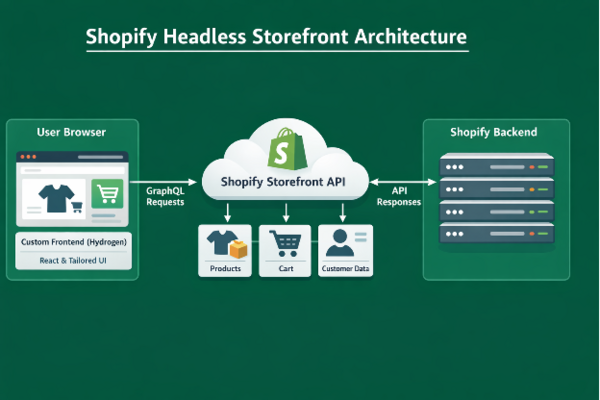
Browser → Custom Frontend (Hydrogen) → Shopify Storefront API → Shopify Backend
Here’s what happens:
- The frontend sends a request to the Shopify Storefront API
- Shopify returns product or cart data
- Hydrogen renders the UI dynamically
This architecture provides much greater flexibility.
Before diving deeper into Hydrogen, it helps to understand how a Shopify headless storefront works.
In a traditional Shopify store:
Browser → Shopify Theme → Shopify Backend
With headless development, the architecture changes.
Browser → Custom Frontend (Hydrogen) → Shopify Storefront API → Shopify Backend
Here’s what happens:
- The frontend sends a request to the Shopify Storefront API
- Shopify returns product or cart data
- Hydrogen renders the UI dynamically
This architecture provides much greater flexibility.
Developers can integrate:
- mobile apps
- progressive web apps
- custom checkout flows
- external CMS platforms
- third-party services
All of this can be achieved without being restricted by theme limitations.
Why Use Hydrogen for Shopify Headless Commerce
Headless commerce is powerful, but it can quickly become complex. That’s exactly why Shopify introduced Hydrogen. Instead of building a React storefront from scratch, developers can use a framework that’s already tailored for ecommerce, making the entire process faster and more manageable.
Developers choose Hydrogen for several reasons, including:
1. Complete Design Freedom
With Hydrogen, developers can build:
- custom layouts
- interactive product pages
- unique animations
- advanced filtering systems
With Hydrogen, you’re no longer limited by traditional theme structure.
2. Native Shopify Integration
Hydrogen works seamlessly with Shopify APIs.
Developers get ready-made utilities for:
- product queries
- cart management
- checkout handling
This saves significant development time.
3. Built for Modern Web Standards
Hydrogen supports modern tools such as:
- React
- GraphQL
- Server components
- Edge rendering
In other words, it aligns perfectly with current frontend development practices.
Key Features of Hydrogen Storefront
Let’s break down the key features that make Hydrogen a powerful choice for storefront development.
1. React-Based Development
Hydrogen uses React, one of the most popular frontend libraries.
This allows developers to build reusable components like:
- product cards
- add-to-cart buttons
- product galleries
- search components
Reusable components reduce development time and improve maintainability.
2. Shopify Storefront API Integration
Hydrogen interacts directly with Shopify’s GraphQL Storefront API.
This API allows access to:
- products
- collections
- cart
- checkout
- customer accounts
For example, fetching products becomes straightforward:
query {
  products(first:10){
    nodes{
      title
      priceRange{
        minVariantPrice{
          amount
        }
      }
    }
  }
}
This structure allows flexible data retrieval without over-fetching.
3. Built-In Commerce Components
Hydrogen includes prebuilt components like:
- ProductProvider
- CartProvider
- Image
- Money
These components reduce the amount of boilerplate code needed.
4. Oxygen Hosting
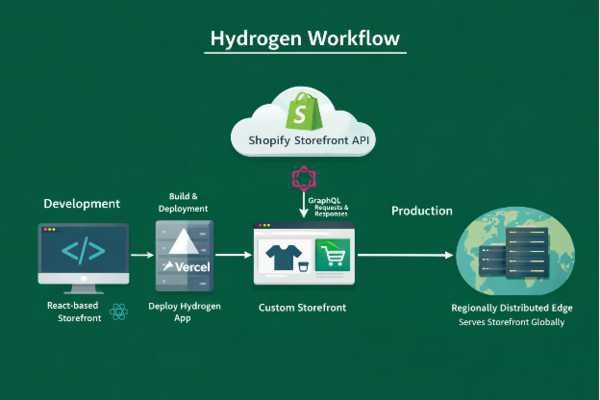
Hydrogen storefronts are often deployed using Oxygen, Shopify’s hosting platform for headless stores.
Oxygen provides:
- global edge hosting
- fast content delivery
-
seamless Shopify integration
This helps storefronts stay fast, even during peak traffic periods.
Hydrogen vs Shopify Themes
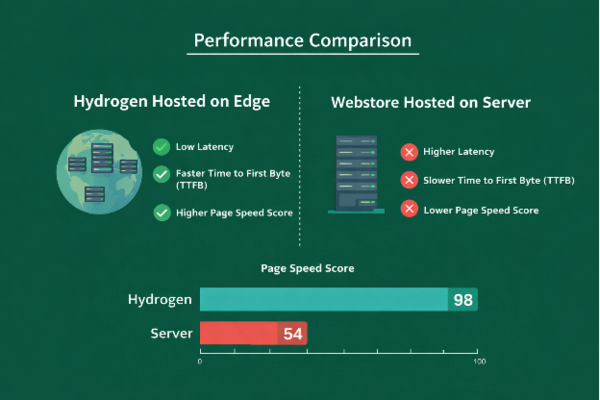
Many store owners ask the same question: should you go headless with Hydrogen, or stick with Shopify themes?
Let’s compare.
| Feature | Shopify Themes | Hydrogen Storefront |
| Customization | Limited | Unlimited |
| Performance | Good | Excellent |
| Development Complexity | Low | High |
| Technology | Liquid | React |
| Scalability | Moderate | Very High |
Themes are perfect for:
- small businesses
- quick launches
- low development budgets
Hydrogen is better suited for:
- large ecommerce brands
- high traffic stores
- custom UX requirements
- omnichannel commerce
How a Shopify Headless Storefront Works
Let’s break this down with a simple flow.
- User visits your website
- Hydrogen loads the React application
- The storefront queries Shopify using GraphQL
- Shopify returns product or cart data
- Hydrogen renders the UI dynamically
Because the frontend and backend are separated, you can also connect other systems.
For example:
- Contentful or Sanity for CMS
- Algolia for advanced search
- Stripe for additional payments
- ERP systems for inventory syncing
This level of flexibility is one of the key reasons enterprise brands choose Shopify headless architecture.
Best Practices for Hydrogen Storefront Performance
Even though Hydrogen is powerful, performance still depends on how you build your application.
Here are some best practices.
1. Optimize GraphQL Queries
Only request the fields you actually need. Over-fetching slows down response time.
2. Use Server Components
React Server Components reduce client-side JavaScript. This improves loading speed significantly.
3. Implement Smart Caching
Hydrogen allows caching responses to reduce API calls. This improves scalability.
4. Optimize Images
Large product images slow down storefronts. Use responsive images and compression.
5. Monitor Performance Metrics
Track metrics like:
- Largest Contentful Paint (LCP)
- Time to Interactive
- Server response time
These metrics directly affect SEO rankings.
Common Challenges in Shopify Headless Commerce
Headless architecture gives you the freedom to build flexible experiences—but it also comes with its own set of complexities. Here are a few challenges teams should consider.
1. Higher Development Costs
Headless stores require experienced developers. Building everything from scratch takes time.
2. Maintenance Responsibility
Unlike themes, you maintain the entire frontend codebase. Updates and security become your responsibility.
3. Longer Development Time
Launching a headless storefront often takes longer than launching a theme-based store. That said, the long-term scalability can justify the investment.
FAQs About Shopify Headless Storefront
1. What is a Hydrogen storefront?
A Hydrogen storefront is a custom Shopify frontend built using the Hydrogen React framework, allowing full control over the user experience.
2. Is Hydrogen better than Shopify themes?
Not necessarily. Themes are faster to launch, while Hydrogen offers more flexibility and scalability for advanced ecommerce experiences.
3. Do you need React knowledge to use Hydrogen?
Yes. Hydrogen is built on React, so developers should be comfortable working with React components and JavaScript frameworks.
4. Can Hydrogen improve SEO?
Yes. Hydrogen storefronts can improve SEO because developers have greater control over performance, rendering strategies, and structured data.
5. Is Hydrogen suitable for small stores?
Usually not. Smaller stores often benefit more from Shopify themes due to lower development costs.
Why Choose PIT Solutions for Shopify Headless Development
Choosing the right development partner is just as important as choosing the right technology.
At PIT Solutions, we specialize in building scalable Shopify headless storefronts tailored to business goals rather than template limitations.
Our Expertise Includes
- Hydrogen storefront architecture design
- Shopify Storefront API integrations
- Performance-focused headless development
- Custom UX/UI implementation
- Headless CMS integrations
- Enterprise Shopify scalability solutions
Why Clients Work With PIT Solutions
1. Shopify + Headless Expertise
We combine deep Shopify experience with modern frontend frameworks like React and Hydrogen.
2. Performance-Driven Development
Every storefront is optimized for speed, SEO, and conversion performance.
3. Scalable Architecture
We build systems designed to grow with your business — not restrict it.
4. Long-Term Partnership Approach
Beyond development, we support optimization, maintenance, and future scaling.
Whether you're migrating from a theme or planning a complex ecommerce ecosystem, PIT Solutions helps you implement Shopify headless commerce the right way.
Talk to our Shopify experts today to explore whether headless commerce is the right fit for your business.